SCULPTURES
API-LOGO
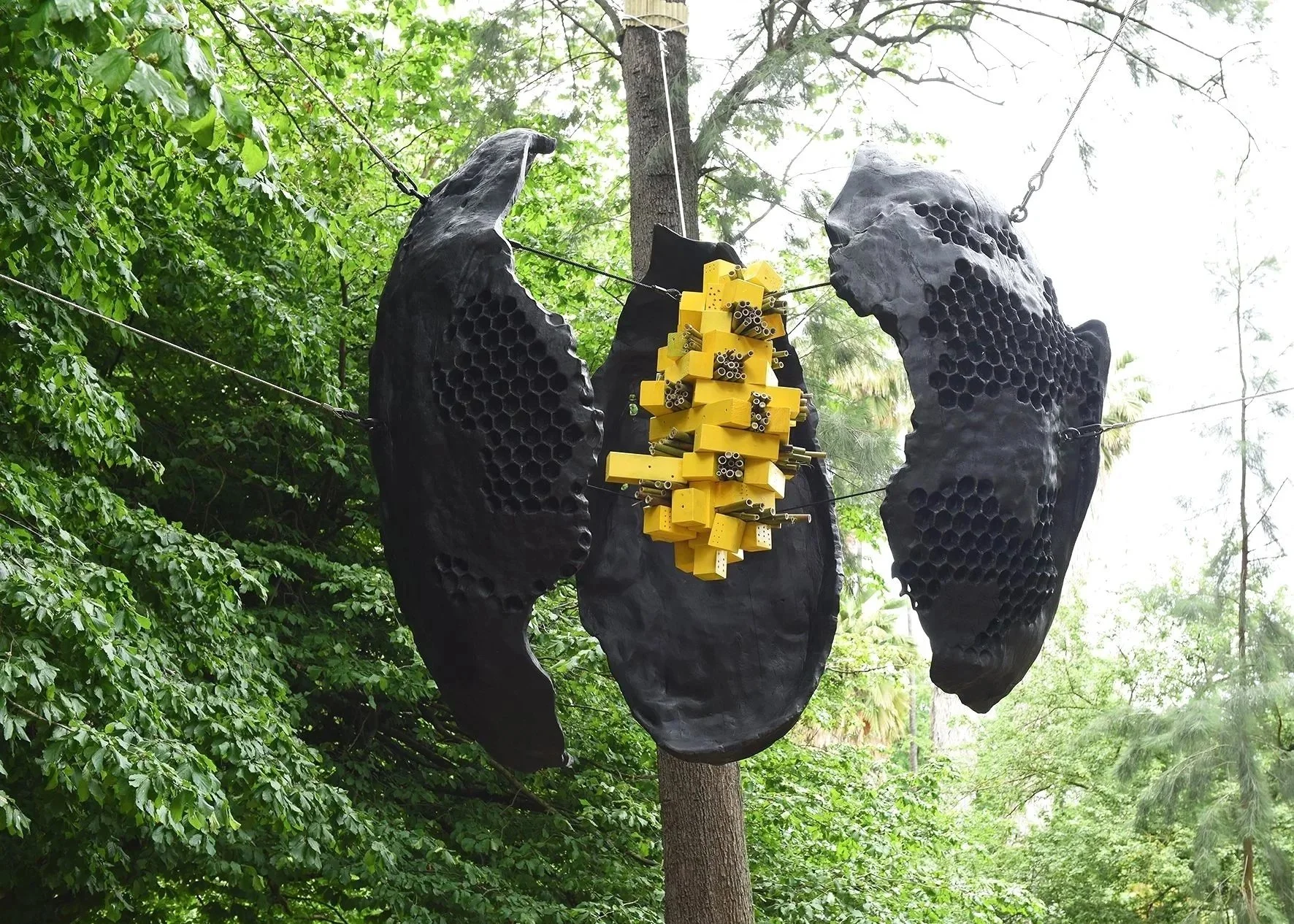
A work created with the living, not merely placed among it. A 260 cm sculpture permanently installed at the Orto Botanico di Roma (Sapienza Università), connected to a network of monitored beehives studying the bees' "grammar." A second video chapter is currently in development, and the project is now in discussion to travel to other sites.
SUNSET BOULEVARD
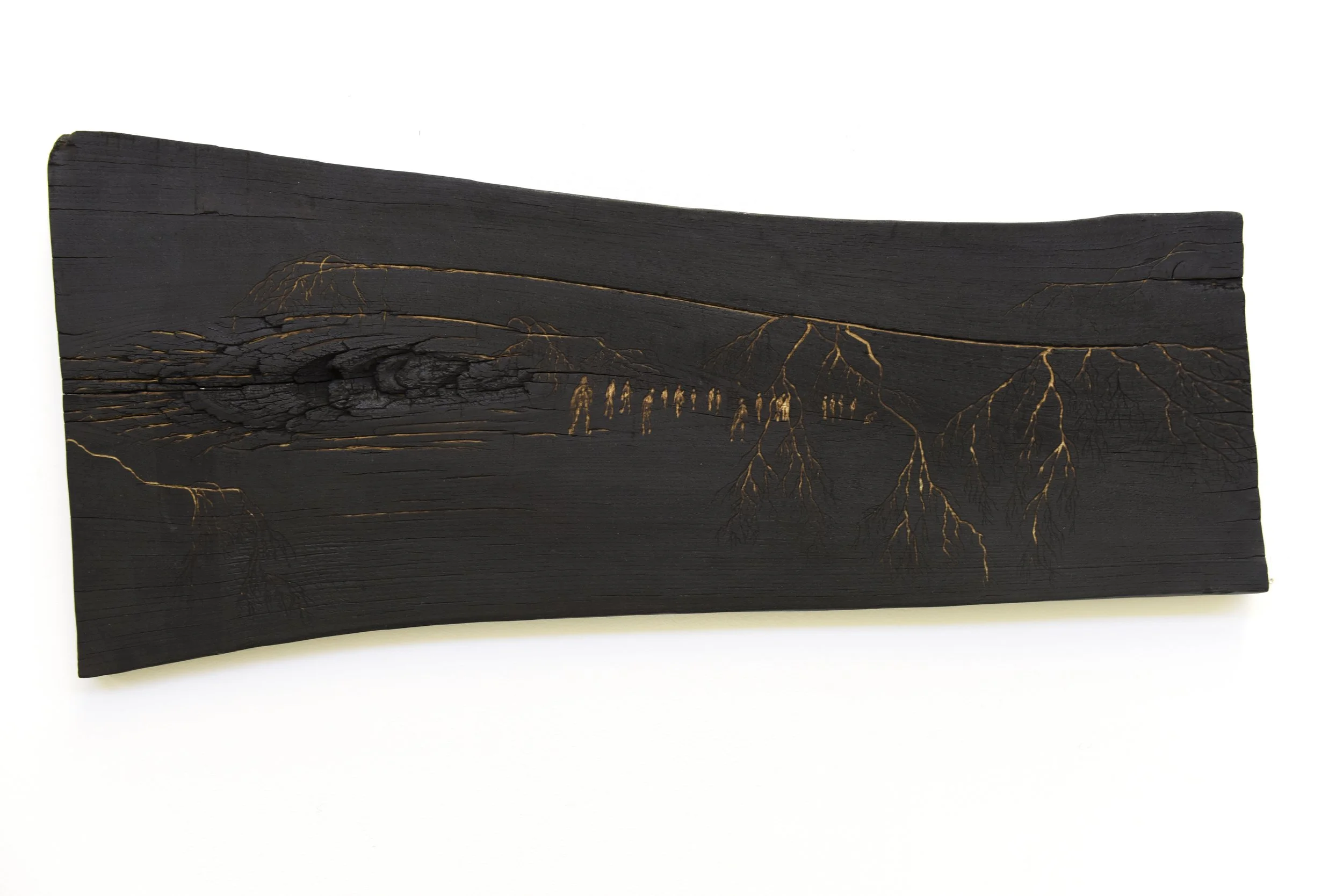
Sculpture on burned wood. A silhouetted procession of figures moves across a charred surface, caught between departure and disappearance — a meditation on migration, memory, and the passage of time.
PRIMITIVE
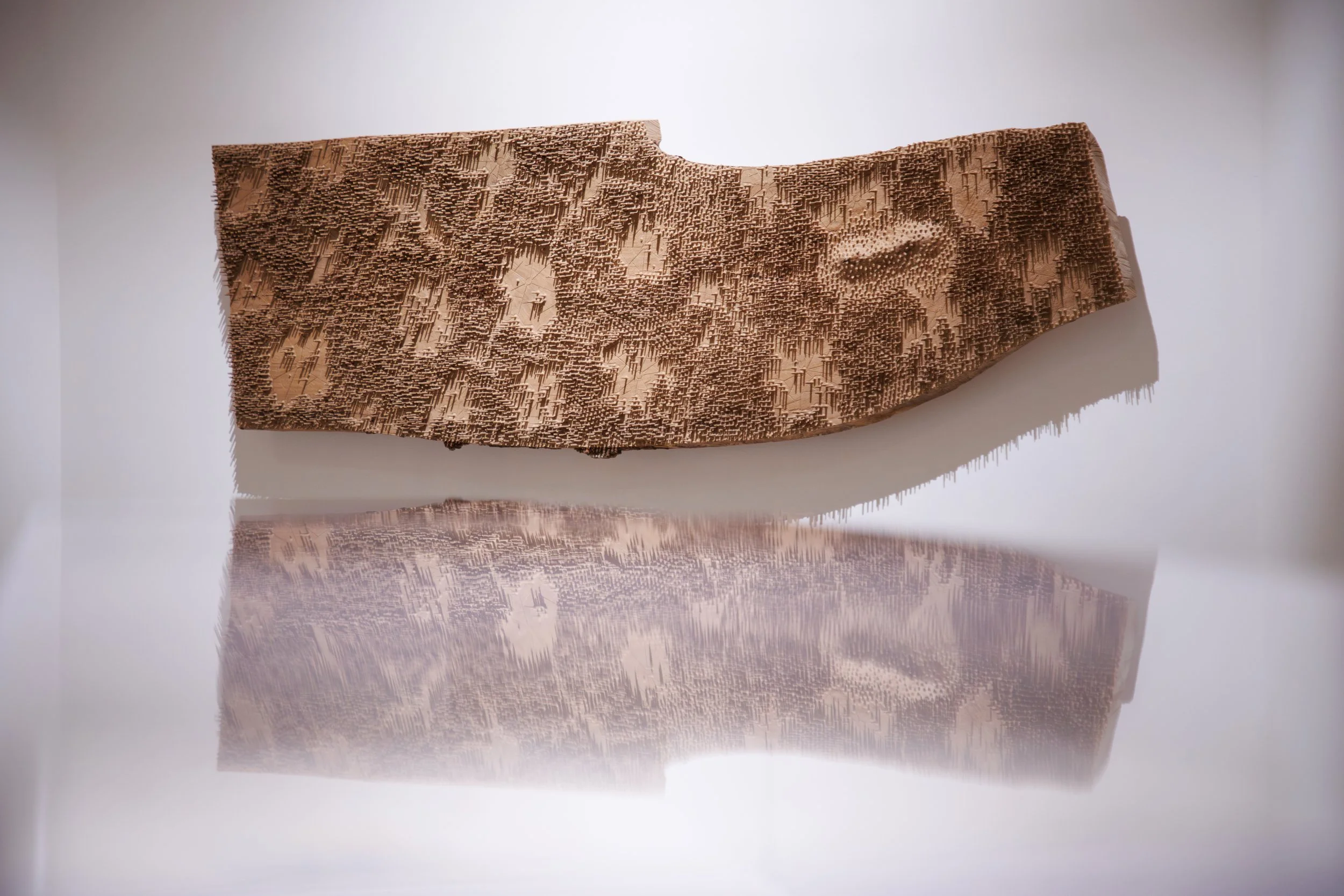
A poetic interpretation of satellite images observing the zones of destruction of primary forests. Repetitive patterns of deforestation become an aesthetic structure, translated into sculptures made from trees cut down in the 1970s in the artist's childhood garden — a return to the essential, to the first bonds of life.
ARTIFICIALIS
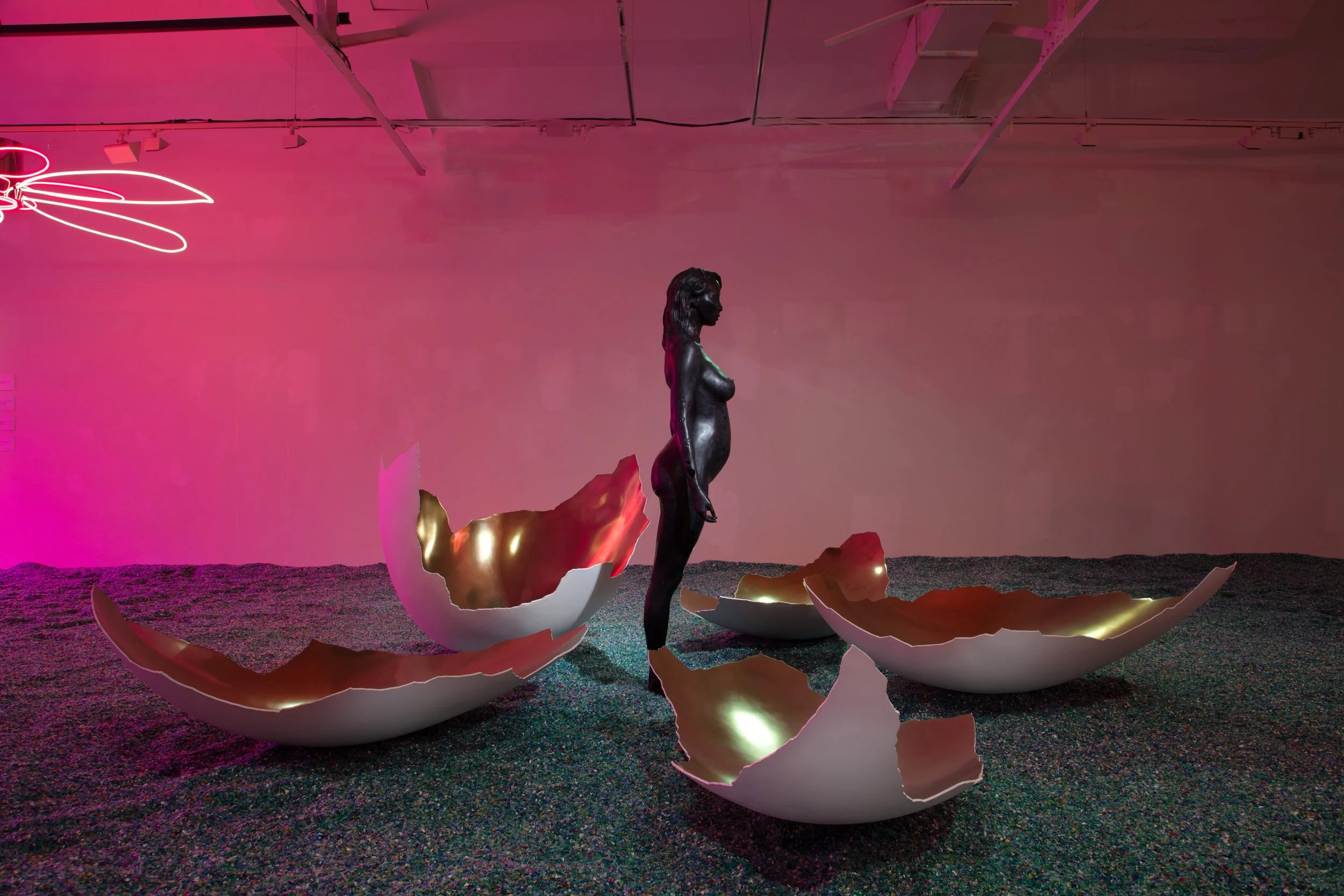
A major installation bringing sculpture, sound and video together — embracing bronze figures caught between the artificial and the intimate. Exhibited at the Saatchi Gallery, London.
FLUXLAND
A floating pavilion moored on the Thames, inspired by the Fluxus movement's ambition to dissolve the boundary between art and life. Fluxland stages the sculpture D-Melancholia within a mobile, ever-shifting architecture — art as a place people can enter, not just look at.

O2
O2 is the formula for the base of life — the O standing for the planet, the 2 multiplying its possibilities. Living plants and glowing pollutant molecules share the same glass vitrine, caught between the life we face and the life we idealize.

MY EDEN IS A LIE
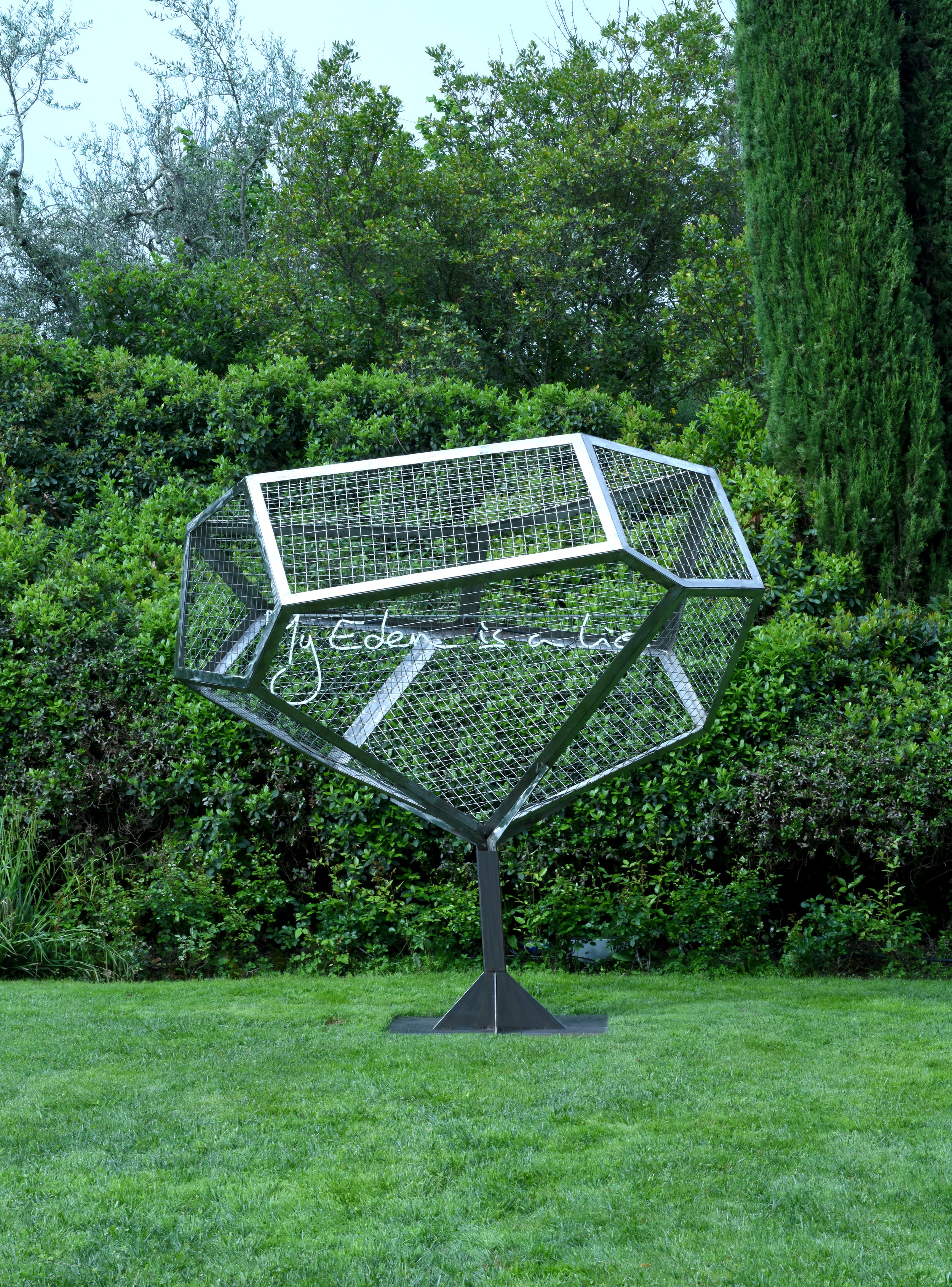
My Eden Is a Lie takes up the polyhedron, a recurring form in Cyril De Commarque's work and a symbol of melancholia — the idea of a perfect, round world transformed by human evolution. Exhibited at the Saatchi Gallery, London.
MY EDEN IS A LIE II
My Eden Is a Lie II continues the exploration of the polyhedron, Cyril De Commarque's recurring symbol of melancholia and of a perfect world reshaped by human hands. It was exhibited in SWEET HARMONY at the Saatchi Gallery, London, in 2019.

FRONTIERS
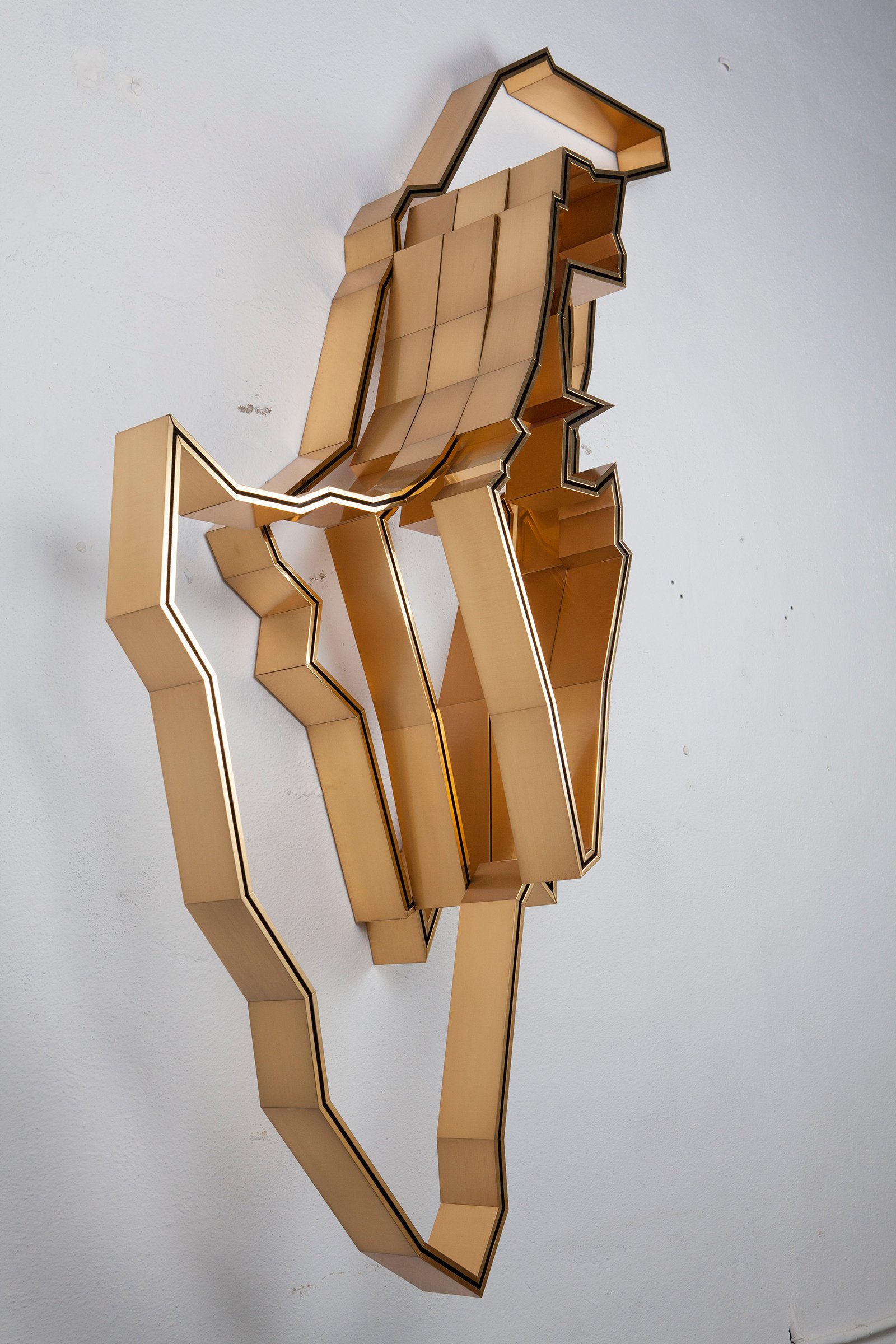
A series of gold-plated aluminium sculptures overlaying the historical borders of a nation — layers of conflict, migration and reconciliation compressed into a single form. Exhibited as a solo show at MACRO, Museo d'Arte Contemporanea, Rome, in 2015.
LES LARMES DE PETER PAN
Les Larmes de Peter Pan draws an eerie picture of an "Ever-Neverland" where growing dependency on technology holds us in a state of self-imposed immaturity — a meditation on Kant's Enlightenment applied to the present. Exhibited at MACRO, Museo d'Arte Contemporanea, Rome, in 2015.

D-MELANCHOLIA
D-Melancholia reflects on the polyhedron — a form that has inspired philosophical contemplation since antiquity — as a metaphor for laying down our ideas and thinking toward a new perspective. An ongoing project, the installation is composed of four sculptures exhibited in a line.

MIGRANTS
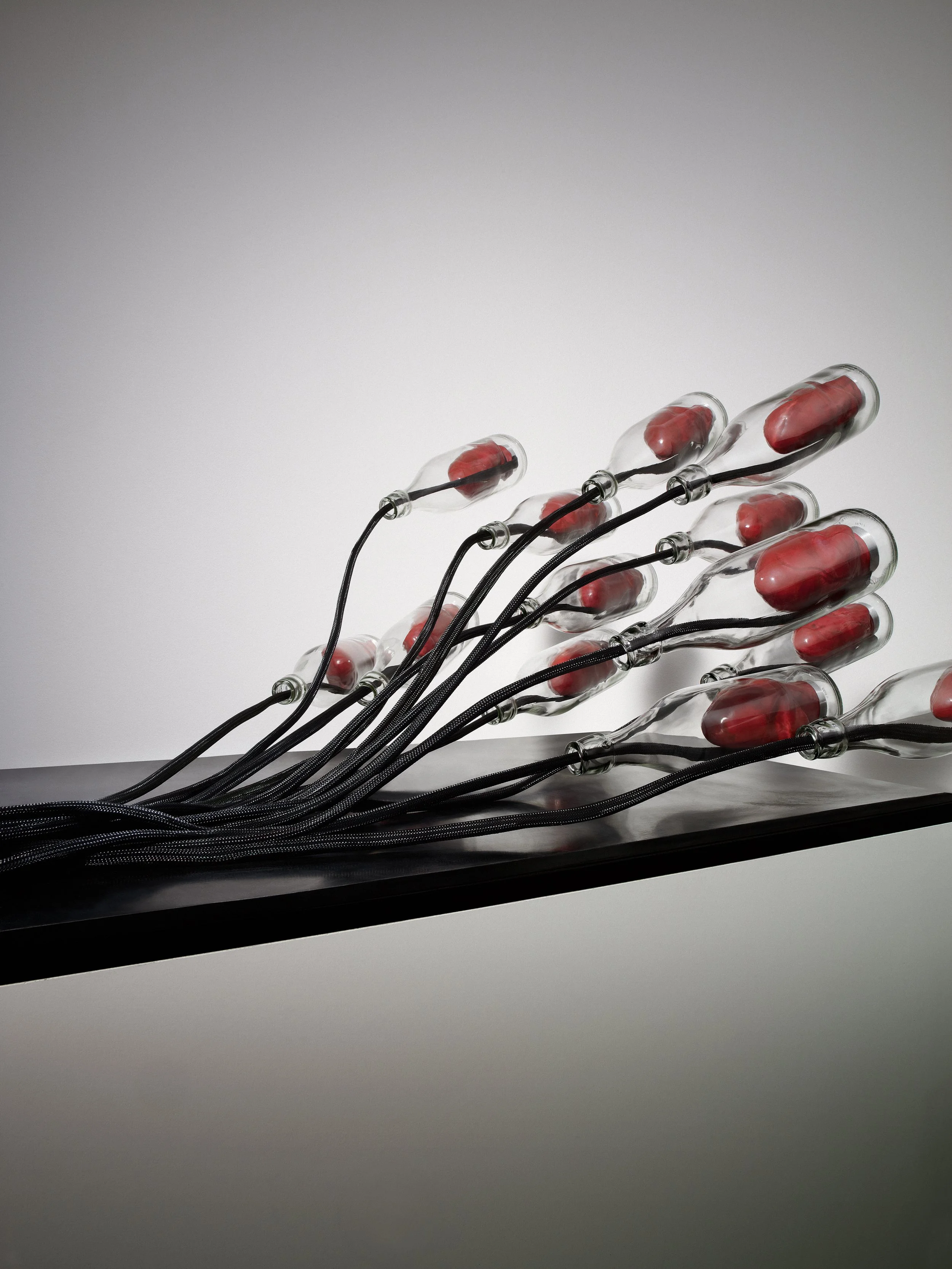
Migrants is an audio sculpture inspired by The Raft of the Medusa — a boat trailing bottles, each holding a beating heart-shaped membrane and a voice, together drowned out by the sound of their own pulse. Exhibited in Fragile at the Stanze del Vetro, Fondazione Cini, Venice Biennale, 2013.
LA RACINE PERDUE, LE PÈRE DE MON PÈRE
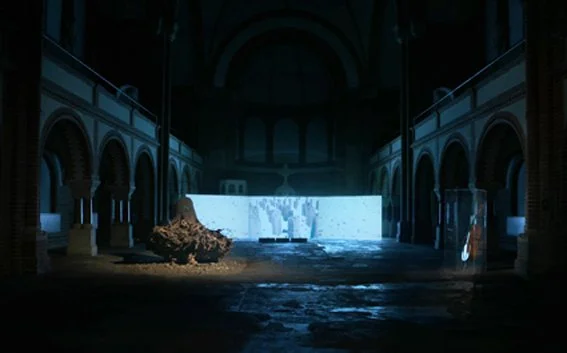
La racine perdue, le père de mon père traces the artist's father's search for his own father at Buchenwald — a root extracted from the camp, a video projection and a sound installation built around grief as a form of authorization to live. Exhibited in New York, Berlin, at the BNF Paris, and at the Memorial of the Compiègne deportation.